Stemtree of Spring TX: Coding Classes for Kids That Spark Imagination
The first time I watched a room full of kids lean into a screen with intense focus, I understood why after school programs matter. The glow of a causal question turning into a cascade of code lines, the giggles when a robot bumps into a wall and then recalibrates, the quiet satisfaction of a project finally compiling without errors—these moments aren’t accidents. They’re the living proof that a well designed coding program can change the texture of a child’s day, week, and perhaps their future. In Spring, Texas, that change has taken root in a place called Stemtree, a hub where kids don’t just learn to code; they reframe what they believe about their own capabilities.
The landscape of after school STEM is crowded with options, yet Stemtree stands out for a blend of approachability and rigor. It isn’t merely about teaching syntax or dragging kids through worksheets. It is about inviting curiosity, guiding problem solving, and supplying the scaffolding needed to turn a fuzzy idea into something tangible that a child can hold in their hands and explain to a parent with a smile. In a town that values practical outcomes, Stemtree’s coding classes for kids balance play and discipline, nurturing persistence as a core habit rather than a rare achievement.
What makes Spring Texas a natural home for this kind of program is something quieter and more lasting than a glossy marketing line. The neighborhood has a real sense of place, a culture that blends family routines with school calendars and weekend projects. Children here grow up visit website around relatives who tinker with gadgets in their garages, who fix bikes spontaneously, who know how to translate curiosity into a plan and then execute that plan with a measurable result. Stemtree taps into that heritage by offering a structured space where a kid can try a new language, push a few buttons, and walk away with something they created rather than something they consumed. The class becomes a small community where questions are celebrated and mistakes are recognized as stepping stones rather than dead ends.
A close look at how Stemtree runs its Spring TX operation reveals what makes it effective. The program is built around a cadence that respects a child’s attention span while never underestimating what a curious mind can absorb with the right guidance. In practice, that means a mix of guided exploration and independent tinkering. Children begin by understanding a goal, such as building a simple video game or programming a robot to navigate a maze. The instructor then introduces the necessary concepts in bite sized portions, showing demonstrations, offering prompts, and inviting students to make their own hypotheses. The room becomes a workshop where instructor and student move in tandem, each learning from the other. When a student hits a snag, the strategy is not to offer the answer outright but to pose a question that redirects the thinking. The aim is not to produce batches of code monkeys, but to cultivate resilient problem solvers who know how to experiment, observe, and adjust.
The curriculum at Stemtree takes careful account of what kids actually bring to the table. Some arrive with a basic familiarity with tablets and touch screens, others with a purely verbal understanding of problem solving. The best instructors treat these differences as strengths. They begin by asking students to describe what they want their program to do in plain language before revealing any code. That step is essential because programming is not merely typing characters; it is translating a plan into a precise series of steps. When a child can articulate the outcome in concrete terms, the bridge to code becomes clearer and less intimidating. From there, the path forward is a sequence of experiments, each one building on the last. It’s a gentle progression, but it’s also deliberate and purposeful.
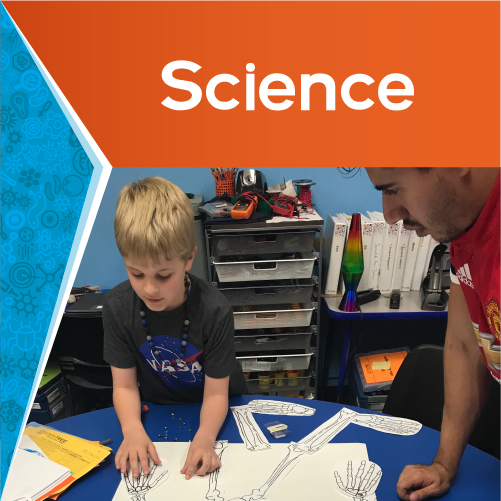
In Spring, the choice of a coding class for kids often hinges on how the program balances safety, accessibility, and challenge. Stemtree excels on all counts. Safety starts with well trained staff who maintain clear boundaries, insist on respectful collaboration, and ensure that devices are used responsibly. Accessibility means offering a spectrum of entry points. Beginners might start with block based coding or simple Scratch like environments that visualize logic flows, while more prepared students graduate to Python or JavaScript, with projects that feel meaningful rather than abstract. That progression matters because it respects the child’s pace while holding a steady line to personal growth. The challenge comes from real projects that require planning, iteration, and communication—essential soft skills that travel alongside technical ones.
The tangible outcomes are not just about the final product. They are about the shift that happens in a child’s confidence, the quiet mastery that seeps into other subjects. A child who learns to plan a small game learns to organize a study session for a big test. A student who codes a robot to follow a line discovers that many small, anatomical steps taken in a precise order can create something that moves with intention. The ripple effects extend to collaboration at home and in school, where teamwork and the ability to articulate a problem become as valued as the final result.
Let me share a few vivid examples from the experience on the ground. In one after school cohort, a group of third and fourth graders decided to design a digital scavenger hunt that used a map and a set of clues. The challenge forced them to think about sequence, variables, and loops. They debated whether to hard code every clue or to design a framework that could be reused across multiple hunts. After several sessions, they settled on a hybrid approach: a basic map with dynamic clue generation that could adapt to different themes. The moment of breakthrough arrived not when a clue algorithm finally worked, but when a student suggested a constraint that simplified the problem space. It was a small reminder that the heart of engineering is not inventing complexity, but knowing what to leave out.
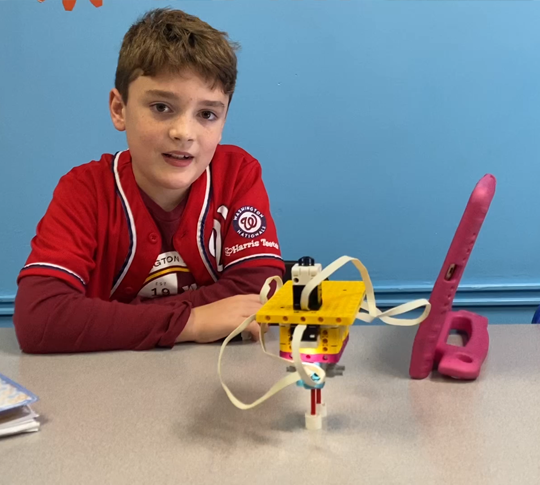
In another class, a budding robotics enthusiast worked with a Legomation style kit to understand sensors and feedback loops. The robot needed to recognize a line on the floor and adjust its steering to stay on course. The child’s early attempts slipped into wandering or veering off track. Rather than capping the process with a corrective answer, the instructor invited the student to observe the robot’s path and document what changed when a particular sensor was adjusted. A week later, the improvement was tangible: stability improved, the robot glided more smoothly, and the student could explain in simple terms why the changes mattered. The lesson extended beyond robotics; it touched on how precision, patience, and a willingness to test ideas repeatedly translate into real world success.
Of course, any program will encounter limits. A big gap in many after school options is not the absence of content but the absence of meaningful feedback loops. Children need timely feedback that helps them adjust their approach, not generic praise that inflates without guiding. Stemtree addresses this by calibrating feedback to each student. Instructors track progress with short, informal assessments embedded in weeks of work. They note what a student can do now, what remains challenging, and what kind of support will help next. The feedback is concrete and actionable: a researcher might say, add a parameter to control speed, or rewrite a loop so it runs more efficiently. The specificity matters. It moves a child from guessing to understanding, and from luck to method.
The after school setting adds a particular texture to learning. It is a time when a young mind is both rested and energized, naturally primed to explore. Some families in Spring count on Stemtree to provide structure that complements school hours, while others rely on it as a bridge to more advanced learning. The flexibility is a draw: a weekly schedule that fits around sports practices, music lessons, or family duties is not a luxury; it is a practical necessity. The program’s design responds to that reality by offering sessions that feel compact and purposeful, but not rushed. There is a rhythm to each afternoon—a quick handshake, a warm up exercise to loosen conceptual thinking, a guided lab where the kids work in small teams, and a reflection moment before packing up for home. The goal is to create a sense of continuity rather than a one off experience.
An important part of Stemtree’s approach is its emphasis on creativity as a legitimate engine of learning. Coding is not seen as the end in itself but as a tool that unlocks a child’s imaginative capacity. When a student creates a game with a narrative, or builds a robot that participates in a pretend city, the coding becomes a language for storytelling, and that is a powerful attractor. The creative dimension is complemented by problem solving that feels empirical and grounded. Students learn to formulate hypotheses, test them, and revise as needed. The process mirrors scientific inquiry and helps children understand that knowledge is not a fixed destination but a journey of exploration.
There are practical considerations that families weigh when choosing an after school stem program. Cost is one, of course, but it blends with the perceived value of hands on experience. Stemtree positions itself as a high value option by combining small class sizes with accessible teaching assistants, enabling more one on one time than a large classroom might permit. The social environment also matters. The program is designed to cultivate collaboration rather than competition. In a typical session you will hear conversations that go something like this: “If we move the sensor one centimeter to the left, the line detection might improve.” Another student might respond, “Let’s test both ideas and compare results.” That dialogue is how children learn to negotiate, share airtime, and respect different problem solving styles.
Parents often ask about the long term trajectory. Where does proficiency go from here? The answer is layered. Some kids fall in love with building little games and decide to pursue more complex programming paths in middle school and high school. Others discover a taste for hardware oriented projects that dovetail with robotics or 3D printing. Still others enjoy the problem solving aspect of programming and carry the discipline into math and science subjects, where precise thinking and debugging are universal skills. In all cases, the confidence that comes from producing something real—the satisfaction of seeing a program run, the pride in a robot that completes a task, the smile when a friend plays a student’s game—becomes a lasting asset. The learning is cumulative, and Spring provides a fertile environment for it to gather momentum.
From a program design perspective, there are a few decisions that determine the robustness of a coding class for kids. The first is the choice of tools. A well chosen set of platforms allows beginners to see quick wins while later layers of the curriculum introduce more abstract concepts. The balance between block based environments and text based languages is not a mere preference; it’s a careful calibration that keeps students engaged and progressing. The second decision concerns project scope. Projects should be ambitious enough to feel meaningful but constrained enough to be completed within a term. This balance prevents fatigue while ensuring a clear sense of achievement. The third decision involves assessment. Rather than standard tests, Stemtree uses ongoing portfolios, where students curate their best work, reflect on their learning, and set personal goals for the next cycle. A portfolio becomes a map of growth rather than a single test score, and many families find that this approach resonates with how children actually learn.
The broader impact on the community is worth noting. When a cohort of local kids learns to code together, they often become informal ambassadors for STEM in their neighborhoods. They show younger siblings what it means to tinker, they explain a basic programming concept to curious parents at the kitchen table, and they volunteer to run a small coding booth at a community event. The social capital created by these shared learning experiences is not easily measured in test scores, but it is real. It builds a culture where science and technology are approachable, not intimidating. In Spring, that cultural shift matters because it aligns with the town’s values: practical competence, collaborative effort, and a clear-eyed view of how technology shapes everyday life.
When I reflect on the potential for Stemtree to influence a child’s path, I think about the moments that don’t make the brochure. The quiet late afternoon when a student returns to a project and declares, “I finally get loops,” and the room brightens a little as a few peers cheer. Or the moment a family realizes that after school time can become a shared space for curiosity rather than a scramble to manage homework and dinner. These are the subtle shifts that accumulate into a durable confidence in a child’s own ability to tackle hard things. They are the outcomes that matter most to families who want their children to grow up believing they can shape the technology around them rather than merely consuming it.
To help families decide whether Stemtree’s Spring TX program fits their needs, it can help to consider a few practical questions. How flexible is the schedule? How does the school address students at varying skill levels within a single class? What is the process for sharing student progress with parents, and how often does this happen? What kinds of projects are typical for different age groups, and how do these projects align with state standards or school curricula? The answers tend to converge on a simple truth: Stemtree is designed to be a reliable partner in a child’s ongoing learning journey, not a standalone puzzle piece. It balances structure with curiosity, which is exactly what families seek when they commit to an after school program.
As with any educational venture, there are edge cases where a family might need to adjust expectations. Some students are more serial thinkers, enjoying a long, uninterrupted period of sustained focus, while others thrive in collaborative settings that require quick feedback and social interaction. Stemtree’s model accommodates both styles by offering a mix of solitary coding time and teamwork oriented tasks. There are weeks when the room hums with shared problem solving, and weeks when a student hones a personal project that becomes a badge of pride. Recognizing that variety is essential; it prevents boredom and ensures a broad range of learners can find a doorway into the world of code.
For Spring families who have watched their children become more confident problem solvers, the question becomes not whether to enroll but how to weave coding into a busy life without compromising other important activities. The answer often lies in choosing a program that respects the child’s time and energy. Stemtree offers options for after school enrollment that can be tailored to a family’s rhythm, and that flexibility makes a big difference when juggling sports, music lessons, and community commitments. A well planned schedule ensures that the child leaves the classroom with a sense of accomplishment rather than fatigue, and that’s a subtle but vital distinction.
As you consider Stemtree in Spring TX, a few guiding questions can help frame your decision. Does the program feel like a community rather than a set of classes? Are instructors approachable and willing to explain concepts without condescension? Is there evidence that students are growing in both technical aptitude and creative confidence? Do parents receive timely, actionable feedback that helps them support their child at home? When the answer to these questions is yes, you are looking at a program that not only teaches code but also cultivates the mindset to explore boldly.
One part of the experience not to miss is the way Stemtree foregrounds ongoing learning, not one off achievements. A child who finishes a project in a term can come back in the next term to improve it, add features, or pivot the concept toward a new challenge. This continuity matters because it mirrors real world projects, where a solution rarely arrives fully formed on the first attempt. The ability to iterate, receive feedback, and refine is a skill that translates across subjects. It makes a student not just a coder but a thoughtful problem solver, someone who understands that mastery is a process rather than an event.
In the end, Stemtree of Spring TX offers more than a roster of classes. It provides a framework for kids to engage with technology on their own terms, to experiment with ideas, and to learn how to communicate the results of their experiments to others. It is a space where a curious child can feel seen, where a shy student discovers a voice, and where a determined learner can push through a tough concept until the light of understanding finally breaks through. The value of such a space extends beyond the classroom doors. It shapes habits of mind that stay with a person long after the school year ends, and it plants seeds for future explorations in fields as diverse as game design, robotics, data science, and digital storytelling.
If you are considering Stemtree for your child in Spring, TX, there are a couple of practical steps that can help you get started without feeling overwhelmed. First, observe a class or sit in on a trial session if the option is available. This firsthand glimpse often reveals the classroom dynamic, the pace, and the kinds of interactions that occur between students and instructors. Second, talk with the staff about your child’s interests and comfort levels. A good program will listen and tailor the experience where possible, offering pathways that align with the child’s curiosity. Finally, connect with other families who have gone through the process. Real world anecdotes can provide insight that you won’t find in a brochure, especially about how a program integrates with the rhythms of daily life.
As with any meaningful investment in a child’s education, the key is alignment. Stemtree’s approach in Spring TX aligns with families who want a robust, human centered experience that respects children as capable, creative learners. It honors the belief that coding is not simply a skill to acquire, but a language through which a child can express ideas, test hypotheses, and collaborate with others to bring those ideas into reality. When a child can say, with authenticity and pride, that they built something that moves or plays or tells a story, you witness the quiet but powerful moment when learning ceases to be a passive activity and becomes a habit of mind.
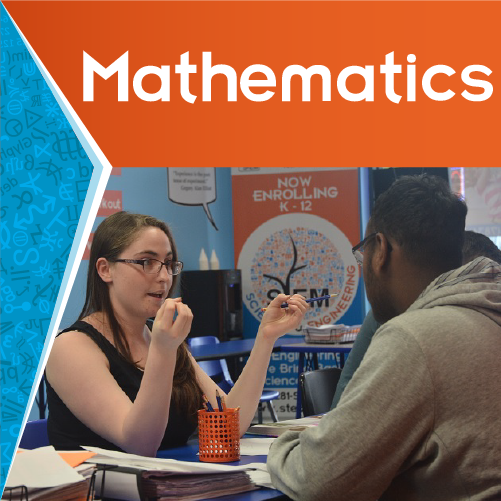
For better or worse, the future is in motion. Technology will continue to evolve at a rapid pace, and the most resilient learners will be the ones who learned how to learn, not just what to memorize. Stemtree of Spring TX is designed to cultivate that resilience. It is a place where curiosity is welcomed, mistakes are resources, and progress is measured by the size of a child’s next question rather than the last answer completed. In a community that values practical competence and collaborative problem solving, that is exactly the kind of program that can shape a child’s relationship with technology for years to come.
A final reflection comes from listening to a classroom full of voices that range from eager beginners to students who already grasp the fundamentals comfortably. The common thread is a sense of agency. Each child leaves with a tangible artifact—a game, a robot, or a small app—that validates the effort invested. Yet even more important is the confidence that lingers afterward: the belief that they can confront a difficult problem, break it into smaller parts, and move forward step by step. In Spring, that belief is not a vague hope; it is a practiced habit built through careful teaching, thoughtful feedback, and a culture that treats curiosity as the essential engine of learning.
Two small snapshots from the community illustrate the lived reality of Stemtree’s impact. A parent told me that after a few weeks, their child stopped asking for ready made solutions and started asking for time to test ideas, documenting results, and presenting findings with clarity. Another family shared that their younger sibling, who previously avoided math concepts, began framing problems as puzzles to solve, inspired by the kid friendly engineering challenges at Stemtree. These stories are not anomalies. They are indicative of a curriculum that respects children as capable learners and offers them the tools to prove it, one project at a time.
In a field that sometimes presents itself as either overly abstract or relentlessly hands on, Stemtree leans into a balanced middle. It recognizes that kids learn best when they see value immediately, but must also be supported as concepts deepen. It celebrates the moment when a junior coder finally gets a loop to run correctly, and it does not shy away from admitting when a concept has not yet clicked. The program thrives because it refuses to pretend that learning is simple or instantaneous. It is honest about the work required, and it rewards effort with clarity and tangible outcomes.
What does this mean for families in Spring TX considering after school programs for STEM education? It means choosing a partner that can translate complex ideas into accessible, concrete experiences while maintaining a pace that challenges without overwhelming. It means seeking a place where instructors are as committed to developing soft skills as hard skills, where teamwork, communication, and accountability are built into the daily routine as much as debugging and building. It means recognizing that the benefits of such a program extend beyond the screen or the robotics lab, reaching into the child’s broader academic life and future ambitions.
Stemtree’s coding classes for kids do not promise overnight transformation. What they do promise is something more reliable: a structured, supportive environment where curiosity is the currency, and where children learn to invest that curiosity into projects that matter to them. It is a place where a child’s first lines of code can bloom into a lifelong interest, where a simple robot can become a template for bigger ideas, and where a group of peers can turn a shared problem into a successful collaboration. In Spring Texas, that promise has become a practical reality for families who want more than just a quick fix for after school time. They want a space where learning feels meaningful, where progress is visible, and where every child leaves ready to ask the next big question.
Two small but meaningful observations from the field can close this reflection. First, the most enduring outcomes come from consistency. A regular schedule, attentive instructors, and a portfolio that grows week by week ensure a child does not drift away from the momentum built in those early weeks. Second, the value of the experience lies in its ability to adapt. A good program evolves with the child, offering new challenges as skills mature and returning students find new avenues for exploration. When these elements converge, a coding class for kids becomes not just a place to learn but a place to belong.
If you are curious about Stemtree of Spring TX, consider visiting their website and talking with current families about their experiences. Ask about beginner friendly pathways, how projects are selected, and what a typical term looks like for age groups you are considering. A thoughtful conversation will reveal not only the quality of instruction but the values that shape the classroom: respect for each learner, commitment to hands on practice, and a belief that every child deserves the opportunity to discover their own potential through the joy of building. In the end, that belief is what makes Stemtree more than a curriculum. It makes it a community where imagination becomes the first instrument of learning, and where the next generation of problem solvers learns to play it with confidence.