Stemtree.com Stem Learning Center: Spring TX’s Center for Inquisitive Minds
Spring, Texas sits in a curious space between tradition and experimentation. On a quiet stretch of street, a brick-and-glass building hums with the rhythm of kids’ questions and the steady ping of keyboards. This is Stemtree.com Stem Learning Center, a place that doesn’t claim to solve every problem in one afternoon, but offers a dependable path for children who want to understand how the world works, piece by piece, rule by rule, experiment by experiment. It is a center that has grown from a philosophy of learning by doing into a community where families, teachers, and mentors co-create moments of discovery.
What makes Stemtree in Spring distinctive is not simply the assortment of after school programs on offer. It is the deliberate cultivation of mindset. The instructors here aren’t merely tutors who enforce correctness; they are guides who invite young minds to test ideas, to reconcile failure with insight, and to translate curiosity into method. That might sound lofty for a place that runs robotics classes for kids or coding classes for kids, but in practice the center navigates the tension between play and rigor with a steady hand. The result is a space where a child who is drawing a circuit can also be learning to communicate an idea with clarity, both written and spoken.
A personal observation from a parent who observed sessions over several seasons is that Stemtree’s approach respects the different tempos at which children learn. Some students arrive with a library of questions already stacked in their minds; others carry a stack of notebooks, each page scrawled with doodles that hint at an emerging aptitude. The staff responds by meeting each learner where they are, gently steering toward a scaffolded path that honors both the process and the product of learning. The outcome is not just a stronger grade in STEM, but a stronger sense of agency in the child.
The phrase STEM education center carries weight in this region because Spring households tend to see science and technology as both utility and culture. The after school stem programs here are designed with that dual aim in mind: to develop practical skills that translate into real-world confidence, while also nourishing a sense of wonder that keeps kids engaged long after the first spark of interest fades. The center’s environment reinforces that balance. You walk in and you hear the soft hum of machines in one wing, the quiet focus of a student debugging code in another, the collaborative chatter that signals a small group tackling a shared challenge. It is a living lab, a place where curiosity is the default state and structure is the scaffolding that makes curiosity sustainable.
A thread that runs through Stemtree’s offerings is the emphasis on process. In light of the demands families face after school, there is a practical discipline here: work is often project-based, deadlines are gentle but real, and feedback is constructive rather than punitive. A session may involve assembling a small robotics project, but the real objective is to develop a set of transferable habits—planning, documenting, testing assumptions, and iterating toward a functional solution. The centers in this network often talk about “coding as literacy” and “engineering as problem solving,” a phrasing that captures the dual nature of the work: you learn to think like a coder, you learn to build like an engineer.
To understand the breadth of Stemtree’s Spring TX location, consider the range of programs and how they interlock. Think of a chain where each link supports the next, rather than a collection of isolated offerings. The after school stem programs often begin with foundational coding or robotics that engage kids at an accessible level. Over time, students can layer in more sophisticated topics—2D and 3D modeling, electronics, data analysis, even a taste of artificial intelligence concepts. Each step is aligned to age-appropriate milestones, but the real magic lies in the continuity. Kids who start as beginners become confident navigators of a landscape that rewards sustained effort.
In practice, what the center delivers emerges from a blend of structured curricula and flexible mentorship. The staff understands that every family has constraints. Some students ride buses after a long day at school, others are navigating the after school routine with multiple siblings in need of attention. Stemtree’s scheduling recognizes these realities by offering options that can fit into a busy life. There are programs designed to be short and intense, to fit a single semester, and others that unfold across a school term, allowing a deeper dive into a topic. The result is a practical rhythm that accommodates the ordinary demands of family life without sacrificing the seriousness of the learning goals.
Within a classroom, the learning culture is evident in the way students talk to each other. There is a quiet expectancy that questions will be asked and that answers will be tested against evidence. If a group is working on a robotics challenge, you hear not just instructions but questions—What happens if we change the motor controller timing? What if we rearrange the sensor layout to improve accuracy? The teacher’s response is rarely a verdict; it is a prompt to refine the approach. This is learning as a collaborative venture, a social practice as much as a cognitive one. In such an environment, children learn to articulate their reasoning with clarity, to defend their method with data, and to listen when a peer points out a potential flaw. The skill set is not only about technical prowess but about the social intelligence that accompanies rigorous inquiry.
A recurring thread across experiences at Stemtree is the sense that mistakes are not failures but information. In a field where one misstep can be both costly and instructive, the center’s culture reframes missteps as the critical data points that guide improvement. The difference between a negative experience and a learning opportunity often comes down to how a teacher frames it. Here, constructive feedback is precise and actionable. A mentor might say, “That approach works in theory, but your sensor is giving an unstable reading. Let’s add a filter to reduce noise and then retest.” The next iteration emerges from that feedback loop, not from a punitive posture. The result is a classroom where kids feel safe to take intellectual risks, knowing that the path to mastery is paved with experimentation.
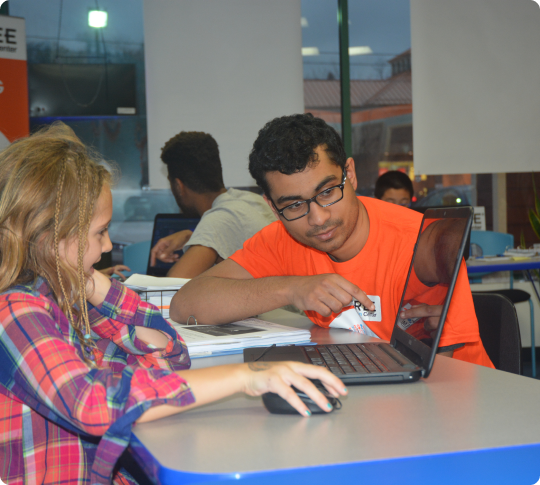
The physical layout of Stemtree’s Spring campus also reinforces its educational philosophy. The space is organized in zones that map onto different modes of inquiry: a makerspace filled with modular components, a computer lab streaming with code environments, a quiet corner for document sharing and reflection, and a robotics bench where assemblies come to life under careful supervision. The design is not flashy; it is purposeful. Everything has a reason that links to a learning objective, from the height of a workbench to the lighting that reduces eye strain during long debugging sessions. The environment matters because attention is a resource, and here attention is allocated with care to maximize each child’s capacity to engage.
The practical benefits of enrolling a student in Stemtree extend beyond the immediate mastery of tools and techniques. For families, the value proposition includes the development of time management, project planning, and collaborative skills that often translate to improved performance in school and better preparation for a tech-inflected future. The center’s programs are crafted with measurable outcomes in mind. In some cases, students complete a capstone project that they present to peers or family members, a moment that crystallizes the synthesis of knowledge and the ability to communicate ideas clearly. In other moments, the progress is more subtle, a gradual shift in a child’s approach to tackling a tough problem, more patience during a challenging lab, more willingness to ask for clarification when a concept is unclear. These kinds of shifts compound over time, producing a student who approaches schooling with a more deliberate, analytical mindset.
For parents weighing after school alternatives in Spring TX, Stemtree presents a compelling combination of accessibility and depth. The center’s location is convenient for many families who live in the northern suburbs, and the scheduling tends to align with the typical school calendar, with options for summer intensive sessions or enrichment during school breaks. The programs are designed to be compatible with varying levels of prior exposure to STEM topics. A newcomer can join a beginner’s class and still be welcomed into a community that values ongoing growth, while a student with intermediate experience can be challenged with more advanced projects. This flexibility is crucial in communities where children arrive with different experiences and confidence levels. Stemtree’s approach serves both high achievers who crave a rigorous pace and curious learners who need more time to absorb foundational concepts.
There is a quiet economy of experience behind the scenes at Stemtree that might not be immediately visible to a casual observer. The center invests in training mentors who themselves have a background in engineering, computer science, or design. The teachers bring practical sandbox knowledge—the kind that comes from building, testing, and iterating in real-world contexts. They are not simply following a manual; they are adapting to the dynamics of a classroom where a group of eager minds may sprint ahead in one direction and a single student might need a slower, more deliberate path. The mentors cultivate a sense of responsibility for the students’ learning journeys, checking in on progress, offering resources for practice at home, and tailoring challenges to maintain a balance between motivation and achievable outcomes.
The community aspect of Stemtree is worth exploring in more detail. The Spring TX campus often hosts events that bring families into dialogue with educators and with one another. Open houses, student showcase nights, and mini hackathons provide opportunities for kids to demonstrate what they have learned, while parents gain insight into the progress their children are making. These touchpoints are more than social; they function as feedback loops that strengthen the alignment between home expectations and school experiences. When a parent witnesses a child explaining a project with confidence, or when a student teaches a peer a concept they recently mastered, the learning ecosystem expands beyond the classroom into daily life. The impact is ecological: more capable students, more engaged families, and a broader culture of curiosity in the neighborhood.
When considering which programs to prioritize, families encounter practical trade-offs that require thoughtful consideration. STEM education is not a one-size-fits-all path, and a center like Stemtree embodies the reality that different children will derive different benefits from the same program. For some, introductory coding classes for kids are the gateway to a durable habit of problem solving. For others, robotics classes for kids become the initial spark that leads to a fascination with automation, sensors, and control systems. Still others may benefit from a modeling and design track that emphasizes visualization, geometry, and spatial reasoning. The key is to view these choices as an ecosystem rather than as discrete boxes to check. A well-paced sequence often looks like a progression from basic coding to more complex robotics or design projects, with each phase reinforcing the skills from the previous one.
To illustrate how a typical journey might unfold, consider a student named Maya who joined Stemtree in the spring semester. When Maya started, she was curious but cautious, comfortable with creative drawing and storytelling but less confident about math-heavy tasks. The first weeks centered on basic coding concepts presented through a kid-friendly platform. Maya learned to recognize patterns, to break down a problem into smaller steps, and to test her ideas through simple programs. Her mentor encouraged small wins and celebrated them in a way that felt meaningful rather than merely ceremonial. Over time, Maya transitioned into a robotics module where she built a rover from a kit, programmed it to navigate a chalk-drawn course, and recorded performance data to analyze how changes in speed and angle affected the outcome. The improvement wasn’t just technical; Maya grew more comfortable naming what she did, explaining why a choice was made, and revising her plan when the rover misbehaved. By the end of the term, she volunteered to lead a brief workshop for younger students about debugging strategies, a sign that she had internalized a growth mindset and found a voice in the community.
The interplay between individual growth and group dynamics is often subtle yet powerful. In a setting like Stemtree, where multiple projects run concurrently, students have the chance to observe different problem-solving styles. Some peers might adopt a highly methodical approach, writing down every step and testing assumptions with a cool, methodical cadence. Others might prefer rapid experimentation, learning through trial and error, and then backtracking to refine their approach. Observing these divergent paths gives learners a repertoire they can draw on, enabling them to tailor their own workflow to match the problem at hand. The coach’s job then becomes less about delivering answers and more about guiding the learner toward an approach that feels authentic to them.
No discussion of Stemtree in Spring TX would be complete without acknowledging the real-world constraints that families navigate daily. Transportation, after school duties, and competing extracurricular commitments all factor into decisions about where to enroll a child for STEM enrichment. Stemtree’s scheduling approach, which often includes after school options and weekend sessions, is designed to offer a flexible cadence that can slip into a family’s existing routine rather than forcing it to bend around a rigid timetable. For many families, the payoff of this flexibility is measurable: reduced stress around after school care, more predictable routines, and a consistent place where a child can pursue a curious interest without the pressure of keeping up with a high-stakes program.
If there is a single refrain that captures the essence of Stemtree’s contribution to Spring TX, it is this: a sustainable practice of curiosity that translates into competence. The center builds a bridge from questions to methods, from hands-on activity to disciplined thinking, from a child’s first lines of code to a polished project that can be shared with pride. It is a bridge reinforced by mentors who recognize that real learning happens in the moment of struggle, when a learner persists, revises, and finally achieves a new level of clarity.
In the long view, the value of Stemtree extends beyond the achievements of individual projects or the satisfaction of a parent watching a child glow during a showcase. The center helps cultivate an ordinary but powerful habit: the daily willingness to engage with something difficult, to devote time to practice, and to accept that mastery is built, not bestowed. In communities like Spring, where innovation is not an abstract ideal but a practical ambition, that habit matters. It shapes students who see a problem and instinctively ask, How can I test a solution? It shapes families who value ongoing learning together, who ask questions about what their children are doing and why it matters. It shapes teachers who design curricula with enough structure to support progress but enough flexibility to accommodate divergent paths.
What does success look like in this context? It shows up as small moments that accumulate into durable change. A student who uses precise language to describe a debugging process in front of peers demonstrates clarity of thought. A family that notes improved collaboration at home because a child has learned to document steps and share progress in a transparent way sees the broader impact of the center’s methods. A campus where students increasingly choose science and engineering-themed activities as preferred avenues for after school enrichment is another signal that the culture surrounding STEM learning is expanding, not narrowing. These are not telegenic outcomes. They are tangible footprints that families can observe over the course of months and school terms.
For readers considering whether Stemtree is the right fit, a few guiding questions can help. First, what is your child’s relationship with problem solving? If the answer includes a mix of curiosity and hesitancy, a program that emphasizes guided practice with incremental challenges may be ideal. If your child already enjoys building, coding, or designing, you may want to look for a track that offers deeper depth in those areas, perhaps with opportunities to contribute to more ambitious capstone projects. Second, how important is scheduling flexibility? Spring families often juggle multiple commitments. A program that can adapt to changing after school realities is more valuable than one that simply fits a narrow window. Third, what kind of learning culture do you want to model for your child? A community that emphasizes collaboration, constructive feedback, and visible progress tends to empower students to take ownership of their learning journey.
In the end, Stemtree.com Stem Learning Center in Spring TX embodies a practical vision of STEM education that aligns with the realities of family life while remaining committed to rigorous, meaningful learning. It is a place where curiosity is cultivated, where ideas are tested, where students learn to articulate their thinking with precision, and where a supportive network helps each learner emerge with a stronger sense of possibility. The center does not promise quick fixes or instant brilliance. It offers something steadier and more valuable: a structured invitation to grow, a community that values effort, and a path that converges on competence through deliberate practice and thoughtful mentorship.
Two practical notes for families listening to the cadence of this entry into Spring’s educational landscape. First, consider a trial period that allows your child to experience a few sessions before confirming a longer commitment. The transition into a STEM-centered after school routine can be smoother when you treat the first weeks as an exploratory phase, giving your child time to develop a sense of fit with the pace and style of instruction. Second, talk with mentors about your child’s goals as well as any concerns about learning preferences. The most productive outcomes come from a triad of clear expectations, continuous feedback, and a shared plan for progress. A small, early dialogue with teachers can set a trajectory that keeps your child motivated and engaged for the term ahead.
Here is a compact snapshot of what makes Stemtree distinctive in this community, distilled through the lens of real-world classroom experience:
- A focus on learning as a process, not a single right answer. Students are encouraged to test, iterate, and refine.
- A mentorship model that blends technical expertise with accessible communication, ensuring concepts are understood and applied.
- A balance between structured curriculum and flexible exploration, allowing learners to pursue interests while achieving core competencies.
- An emphasis on collaboration, with projects that require students to articulate ideas, defend methods, and listen to diverse viewpoints.
- An attention to practicality, ensuring that after school commitments remain manageable for families while delivering meaningful, lasting impact.
These elements cohere into a learning atmosphere that respects the intelligence of children and the time constraints of busy households. Stemtree’s presence in Spring TX is not merely about offering another set of classes; it is about contributing to a culture that values disciplined curiosity. The hours spent soldering components, debugging code, or drafting a design sketch become, in the right light, the early rehearsals of a future that will demand such habits.
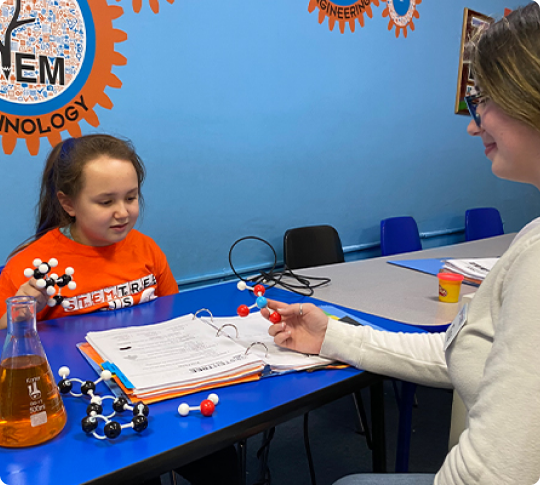
For communities watching STEM education evolve, Stemtree serves as a model of how one center can responsibly bridge accessibility and rigor. It demonstrates that after school programs can be both welcoming and demanding, that a kid who loves to tinker can also learn to argue with clarity and precision, and that mentors who care about outcomes can still celebrate the joys of play and discovery. In Spring TX, that combination matters. It matters to parents seeking meaningful enrichment for their children. It matters to teachers who want a partner in reinforcing classroom learning. It matters to students who discover that their questions have a path to answers, and that the path is paved with support, curiosity, and opportunity.
If you’re in stemtree.com or around Spring and your child is at the stage where questions lead to experiments, a future in engineering, computer science, or design may be closer than you think. Stemtree’s campus could be the next step in that journey. The center offers not just programming or hardware, but a tested approach to how young minds can grow confident, capable, and collaborative. It is a place where answers emerge from a culture of inquiry, rather than being handed down as absolute truths. It is a place where the learning is active, the mentorship is grounded, and the community is built to last.
Wherever your child stands in their curiosity, the Spring TX Stem Learning Center presents a practical, human-centered path forward. It is a community that respects the complexity of learning and the individuality of each learner, while delivering clear outcomes that families can rely on. In that space, students do not simply acquire new skills; they cultivate a way of approaching problems that will serve them long after they graduate from the program. And in a world where technology and science increasingly shape every facet of daily life, that preparation is not just valuable—it is essential. Stemtree stands as a meaningful ally for families who want their children to think deeply, to act boldly, and to continue asking questions with the confidence that curiosity, when nurtured, becomes mastery.